St Lucia Hippo Safety
How to Respect Our Wildest Residents
“Living in St Lucia gives you a deep respect for the natural relationship between the town, the estuary and its wildlife. Hippos have established routes between the water and their nighttime grazing areas. The safest response is always to give them time and space.
Never follow or surround a hippo, and do not move closer for a photograph. Quietly increase your distance, leave its route open and listen to the people helping to manage the situation.”
— Quentin Muir, St Lucia resident & local tourism operator
Understanding basic St Lucia hippo safety helps protect visitors, residents and the animals themselves. A memorable encounter should always end with both you and the hippo continuing safely on your way
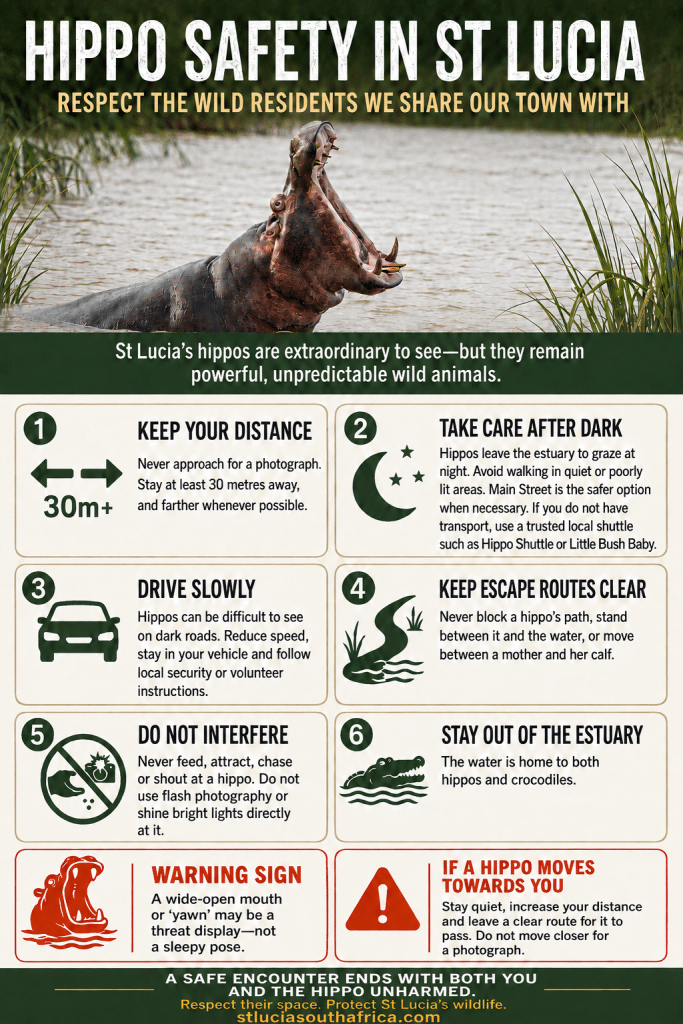
Quick Answer: How Do You Stay Safe Around St Lucia’s Hippos?
Never approach a Hippo on foot or move closer for a photograph. Keep at least 30 metres away and further away whenever possible. Avoid walking through quiet or poorly lit areas after dark, drive slowly at night and never block a Hippo’s route to the water. If a Hippo approaches, quietly increase your distance and leave it a clear path.

Why Do Hippos Walk Through St Lucia?
St Lucia lies beside the Lake St Lucia Estuary within the iSimangaliso Wetland Park, South Africa’s first UNESCO World Heritage Site. This protected wetland provides an important natural habitat for hippos, crocodiles and an exceptional variety of birdlife.
Hippos generally spend the hotter daylight hours resting in water. After sunset, they leave the estuary to graze on grass. Because the town is situated so close to the wetland, hippos sometimes move through residential streets, gardens and grassy road verges while feeding.
Although these nighttime visitors may appear relaxed, they are still behaving naturally in a wild environment. They are not entering town to interact with people, and their presence should never be treated as an invitation to approach them.
You can learn more about their behaviour in our detailed guide to the hippos of St Lucia.

Essential Hippo Safety Rules in St Lucia
Following these practical precautions will significantly reduce the risk of a dangerous encounter:
- Never approach a hippo for a photograph. Use a zoom lens and take photographs from a safe position, preferably inside a vehicle.
- Keep your distance. Remain at least 30 metres away and increase the distance if the hippo changes direction, appears unsettled or begins moving towards you.
- Take extra care after dark. Hippos commonly leave the estuary at night to graze. Avoid walking through quiet, dark or open areas. Main Street is generally better lit, but visitors should remain alert and use a trusted local shuttle when possible.
- Drive slowly at night. Hippos can be difficult to see on dark roads. Reduce your speed, remain inside your vehicle and allow the animal to move away without pressure.
- Never block a hippo’s route. Do not stand between a hippo and the estuary. Always provide a wide, unobstructed path towards the water.
- Never move between a mother and her calf. A protective mother may respond rapidly if she believes her calf is threatened.
- Do not feed or attract hippos. Feeding encourages animals to approach people and properties, creating serious risks for both the community and the hippos.
- Avoid shouting, chasing or flashing lights. Bright lights, flash photography and loud noises may disturb or startle an animal.
- Never enter the estuary water. Lake St Lucia is home to both hippos and Nile crocodiles. Swimming or wading in unauthorised areas is extremely dangerous.
Always listen to local security personnel, wildlife officials, accommodation staff and volunteers. Their instructions are intended to keep people safe while allowing the hippos to reach their grazing areas without disturbance.

What Should You Do If a Hippo Approaches?
If a hippo begins moving towards you, do not move closer, shout or attempt to chase it away. Increase your distance immediately while leaving the animal a clear route through the area. Move towards a secure building or vehicle if one is safely accessible.
Do not surround the hippo with people or vehicles. Crowding can make the animal feel trapped and may prevent it from returning to the water.

Is a Hippo Yawn a Warning?
A hippo’s wide-open mouth is often described as a yawn, but it is not necessarily a sign of tiredness. The open-mouth display exposes the animal’s large canine teeth and may communicate dominance, agitation or a warning.
If you see this behaviour, do not remain nearby trying to capture the perfect photograph. Treat it as a clear indication that the animal requires more space.
The Safest Way to See Hippos in St Lucia
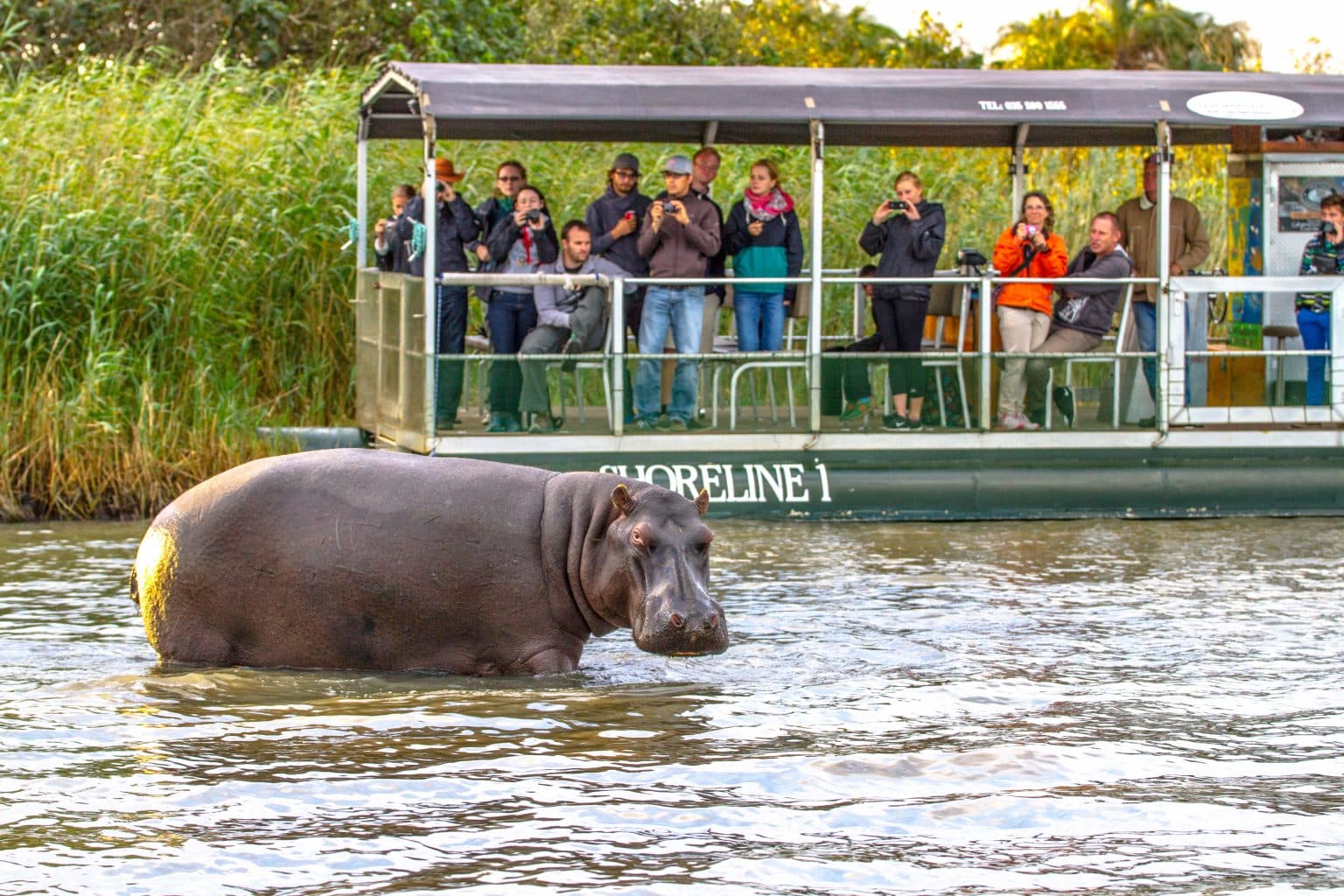
The safest and most rewarding way to observe hippos is from a professionally operated boat or guided vehicle. A St Lucia hippo and crocodile boat cruise allows visitors to watch hippo pods in their natural estuary habitat while an experienced skipper maintains an appropriate viewing distance.
From the boat, guests can observe hippos resting, communicating and interacting without following animals through the streets or disturbing their nighttime feeding routine.
Advice From Our Local Guides
Heritage Tours & Safaris has operated in the St Lucia area for more than two decades. Our local guides consistently emphasise that the greatest safety mistake is treating a hippo sighting as an opportunity for a close-up photograph.
Remain calm, create distance and allow the animal to choose its own route. Responsible wildlife viewing is not measured by how close you get, but by how little your presence changes the animal’s natural behaviour.
